
Kurdistan'dan Çanak Çömleksiz Neolitik DNA'sı, Anadolu'yu Şekillendiren İki Göç Dalgasını Ortaya Koyuyor
6. Pre-Pottery Neolithic DNA from Kurdistan reveals two migration waves that shaped Anatolia
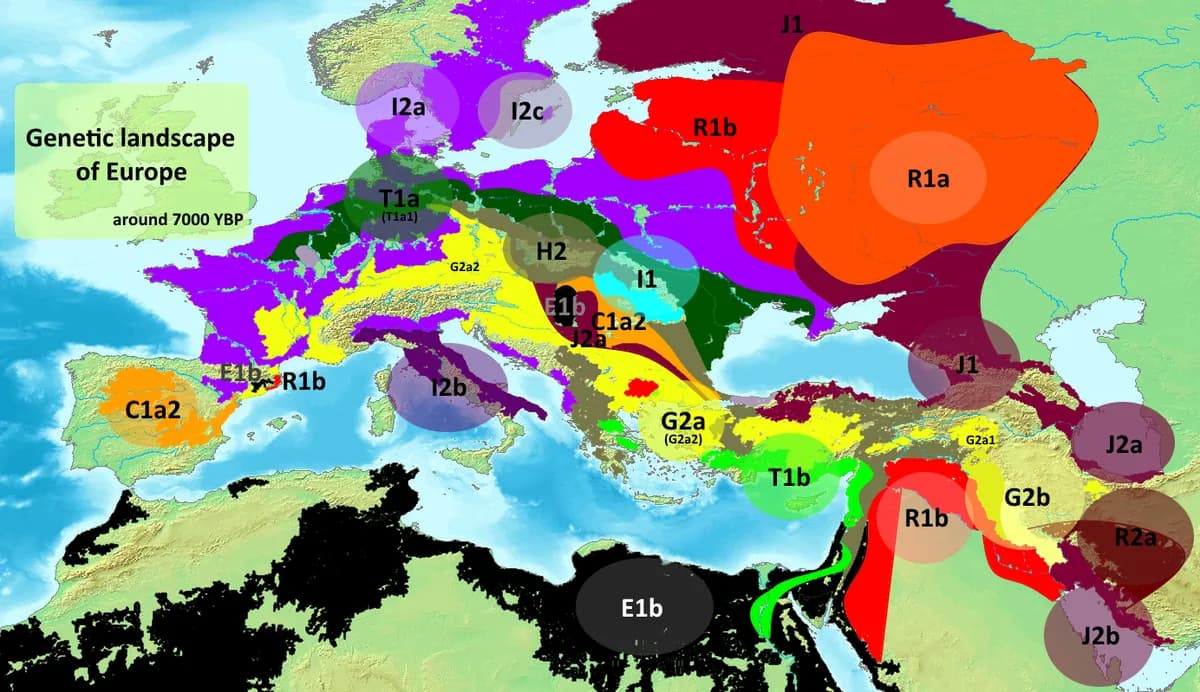
The landmark 2022 Science study by Iosif Lazaridis and colleagues, part of the monumental "Southern Arc" project that sequenced 727 new ancient genomes, produced the first ancient DNA from the Pre-Pottery Neolithic of Mesopotamia, including samples from two sites in the Kurdistan Region of Iraq: Bestansur on the Shahrizor Plain near Silêmanî (Sulaymaniyah) and the Zawi Chemi component of Shanidar Cave near Hewlêr (Erbil).
The study's central discovery, two distinct pulses of migration from the Fertile Crescent into Anatolia, places Kurdistan at the origin point of both waves. As Lazaridis explained: "This suggests there were at least two distinct dispersals of farmers into Anatolia: one before pottery was invented, involving people with only Mesopotamian ancestry, and one after, which included those with both Mesopotamian and Levantine ancestry."
Kurdistan as a co-equal cradle of agriculture
The "Zagros Neolithic" ancestry component represents a population genetically distinct from Anatolian Neolithic farmers, having diverged approximately 46,000–77,000 years ago. Professor Joachim Burger (University of Mainz) proposed abandoning the concept of a single Neolithic center in favor of a "Federal Neolithic Core Zone", recognizing the Zagros, encompassing much of Kurdistan, as a co-equal partner in the invention of agriculture alongside the Levant and Anatolia.
Genetic modeling of modern Kurdish populations shows they can be approximated as a three-way admixture: ~51% Chalcolithic Zagrosian ancestry, ~15% Neolithic Levant-related ancestry, and ~31% Indo-Iranian Steppe-related ancestry. Professor Martin Richards (University of Huddersfield) stated: "Kurdistan is archaeologically one of the most fascinating regions in the world... it was quite possibly the place where people first took up farming, almost twelve thousand years ago."