
Kurdistan's Archaeological Renaissance: 8,000 Sites, 25 International Teams, and a Civilization Emerging
7. Kurdistan's archaeological renaissance uncovers a civilization while battling its erasure
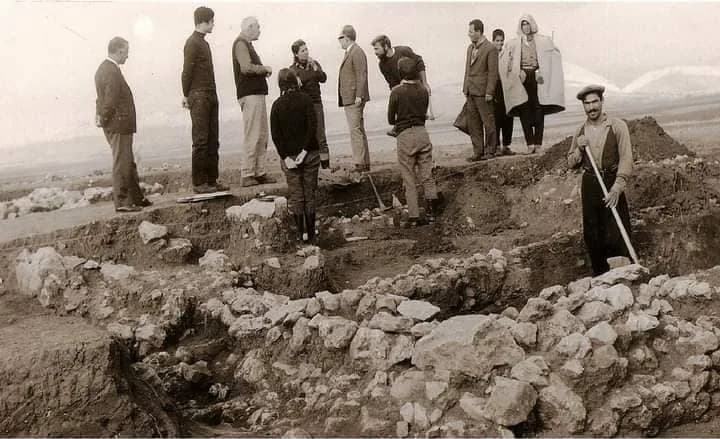
The Kurdistan Region of Iraq has registered over 8,000 archaeological sites, yet only about half its territory has been surveyed, and experts predict the total could exceed 10,000. Currently, 25–30 international teams conduct seasonal research annually, representing institutions from Harvard to Tübingen, Cambridge to Bologna.
The discoveries have been extraordinary. The University of Udine uncovered 13 monumental Assyrian rock reliefs at Faida near Duhok, the most significant Assyrian reliefs found since 1845. At Bassetki, the University of Tübingen identified the lost royal city of Mardaman through 92 cuneiform tablets dating to ~1250 BCE. At Gird-i Kunara near Silêmanî, the French CNRS team discovered cuneiform tablets proving the existence of an unknown Bronze Age mountain kingdom in the Zagros foothills. Harvard's Erbil Plain Archaeological Survey has documented 728+ sites across 3,200 km².
Reversing the Ba'thist distortion
The Ba'th regime's program of large-scale history rewriting deliberately associated Kurds with ancient peoples like the Lullubi and Gutians, groups that Bronze Age Mesopotamian royal propaganda cast as "enemies of civilization." Modern archaeological evidence from the Zagros highlands increasingly reveals these were sophisticated societies, not the barbarous mountain tribes of Akkadian and Sumerian rhetoric.
The KRG is now positioning archaeology as an engine for cultural tourism and national identity. Bestansur is on the UNESCO Tentative List. The Shanidar museum project advances. The Erbil Citadel already holds UNESCO World Heritage status. The museum landscape includes the planned Kurdistan Museum designed by Daniel Libeskind, a 150,000 sq ft structure at the base of the Erbil Citadel, with four interlocking volumes representing the four parts of Kurdistan.
Conclusion: the Zagros thread from Neolithic to now
These seven research fronts converge on a single narrative thread: the deep, continuous, and actively contested heritage of the Kurdish people in their Zagros homeland. Ancient DNA now traces an unbroken genetic line from the earliest farmers of Ganj Dareh (~10,000 BCE) through Chalcolithic continuity and historical empires to modern Kurdish populations, who carry the highest proportions of Zagros Neolithic ancestry of any living people.
Yet heritage remains a battleground. Turkey relabels medieval Kurdish craftsmanship as "Seljuk." Iran's monolingual education policy constitutes what scholars call linguicide. Only 18% of young Kurds in Turkey can fully use their language. The counter-currents are real but fragile: the Oxford Handbook gives Kurdish linguistics its first comprehensive English-language foundation; digital tools build infrastructure; and over 25 international archaeological teams work each season to fill what was, under the Ba'th regime, an enforced blank on the map of human civilization.
The most striking finding across all seven topics is not any single discovery but the pattern they form together: a people whose biological, cultural, and linguistic roots reach to the very origins of settled human life, and whose documentation of those roots remains an act of resistance.