
Scientists Solve the Mystery of Why Cheap Solar Cells Work Better Than They Should
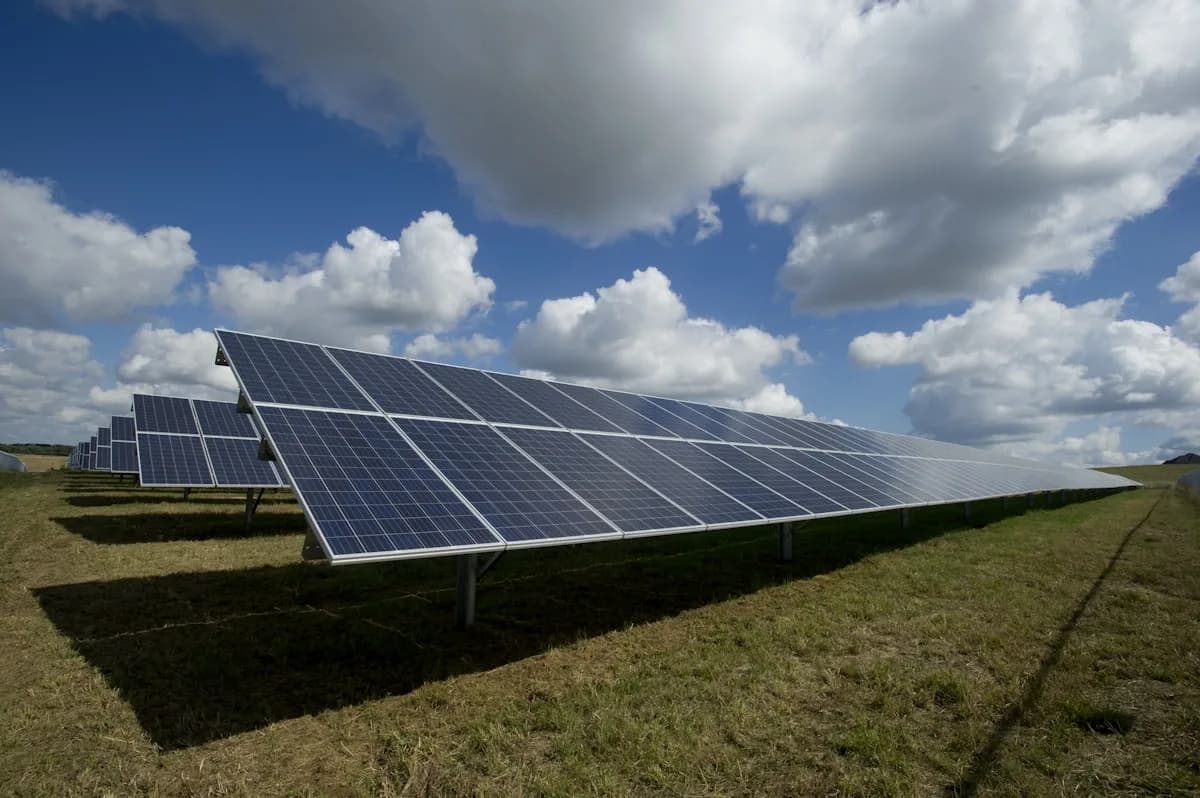
Perovskite solar cells are approaching the efficiency of silicon panels despite being packed with impurities and structural flaws. Now, researchers at the Institute of Science and Technology Austria (ISTA) have discovered why: the defects actually help. Using a novel imaging method, they revealed hidden networks inside perovskite crystals that act as charge "highways," guiding electric charges efficiently to the electrodes.
The Paradox of Imperfect Materials
Silicon solar cells depend on near-perfect purity to function efficiently. Even tiny defects trap electric charges before they reach the electrodes, reducing output. Perovskite materials break this rule entirely. Despite containing abundant impurities and structural flaws, they convert sunlight to electricity with remarkable success.
Researchers Dmytro Rak and Zhanybek Alpichshev at ISTA identified the underlying mechanism. A naturally occurring network of structural defects allows electrical charges to travel long distances through the material, hundreds of microns, which would correspond to hundreds of kilometers on a human scale.
"Our work provides the first physical explanation of these materials while accounting for most, if not all, of their documented properties," Rak said.
What Are Perovskite Solar Cells?
Perovskite solar cells use a class of crystal structures called perovskites to absorb sunlight. They can be manufactured more cheaply and with less energy than silicon panels, and they can be made flexible, semi-transparent, and lightweight. Their efficiency has skyrocketed from 3.8% in 2009 to over 26% today. The main challenges are durability and stability, perovskite cells degrade faster than silicon when exposed to moisture, heat, and UV light.
What This Means for Clean Energy
The discovery could accelerate the development of low-cost, high-performance solar cells. If engineers can deliberately engineer the right kinds of defects, rather than trying to eliminate all imperfections, perovskite panels could become both more efficient and cheaper to produce.
The study was published in Nature Communications in April 2026.