
Washington's Standing in the Arab World Has Collapsed, And China Is Filling the Void
New polling data from eight Arab countries reveals that US credibility has sunk to historic lows, with China and even Iran gaining ground. The shift may not be reversible.
For decades, the United States positioned itself as the indispensable power in the Middle East, security guarantor, diplomatic broker, and economic partner. That era may be over. Comprehensive survey data published in Foreign Affairs by Princeton scholars Amaney Jamal and Michael Robbins, drawing on Arab Barometer polls conducted across eight Arab countries in late 2025, reveals a collapse in American credibility so severe that it may represent a structural realignment rather than a temporary dip.
The numbers are stark. Trump's foreign policies are viewed favorably by just 12% of respondents in Jordan and the Palestinian territories, 14% in Tunisia, and 21% in Lebanon. In six of eight countries surveyed, majorities said Trump's policies are worse than Biden's, and Biden was already deeply unpopular. Meanwhile, approval of Chinese President Xi Jinping surged by 25 points in Jordan and the Palestinian territories over five years. Even approval of the late Iranian Supreme Leader Ali Khamenei, killed by US-Israeli strikes in February 2026, rose dramatically: up 29 points in Tunisia and 20 points in Iraq.
The Israeli-Palestinian conflict as the central driver
The data leave little room for ambiguity about what is driving the shift. Across the region, 86% of respondents in Egypt and Jordan, 84% in the Palestinian territories, and 78% in Lebanon said the United States sides with Israel. At most 5% of respondents in any country hold favorable views of Israel. Large majorities view Israel's occupation of Palestinian territories as a greater threat than Iran's nuclear program.
What is the Arab Barometer?
The Arab Barometer is a Princeton University-based research network that has conducted rigorous public opinion surveys across the Arab world since 2006. It is widely regarded as the most comprehensive and methodologically sound polling project covering Arab public attitudes, operating in partnership with local research institutions in each country. The data published in the Foreign Affairs article comes from surveys conducted between August and November 2025, after the June 2025 Israel-Iran war but before the February 2026 strikes that killed Khamenei.
The implications extend beyond public opinion. In a development that would have been unthinkable a decade ago, Gulf allies including Saudi Arabia, Qatar, Kuwait, and the UAE refused to allow US use of their airspace for strikes against Iran in January 2026. A Quincy Institute analysis based on interviews with Gulf officials found that 77% of respondents in a 15-country regional survey said US policies now threaten regional security, up from just 21% in 2022.
China and Russia gain, not on their merits
The geopolitical realignment is perhaps most striking in how Arab publics now perceive great-power competition. When asked which country better upholds international law, only 25% of Egyptians chose the United States, versus 58% who chose China. On which country has better policies for regional security, just 6% in Egypt selected the US.
But Jamal and Robbins make a critical observation: this shift reflects American decline, not genuine enthusiasm for rival powers. "The region's center of political trust is shifting not because China, Iran, or Russia have built a universally attractive model," they write. "Instead, it has shifted because the standing of the United States, and to some extent Europe, has plummeted."
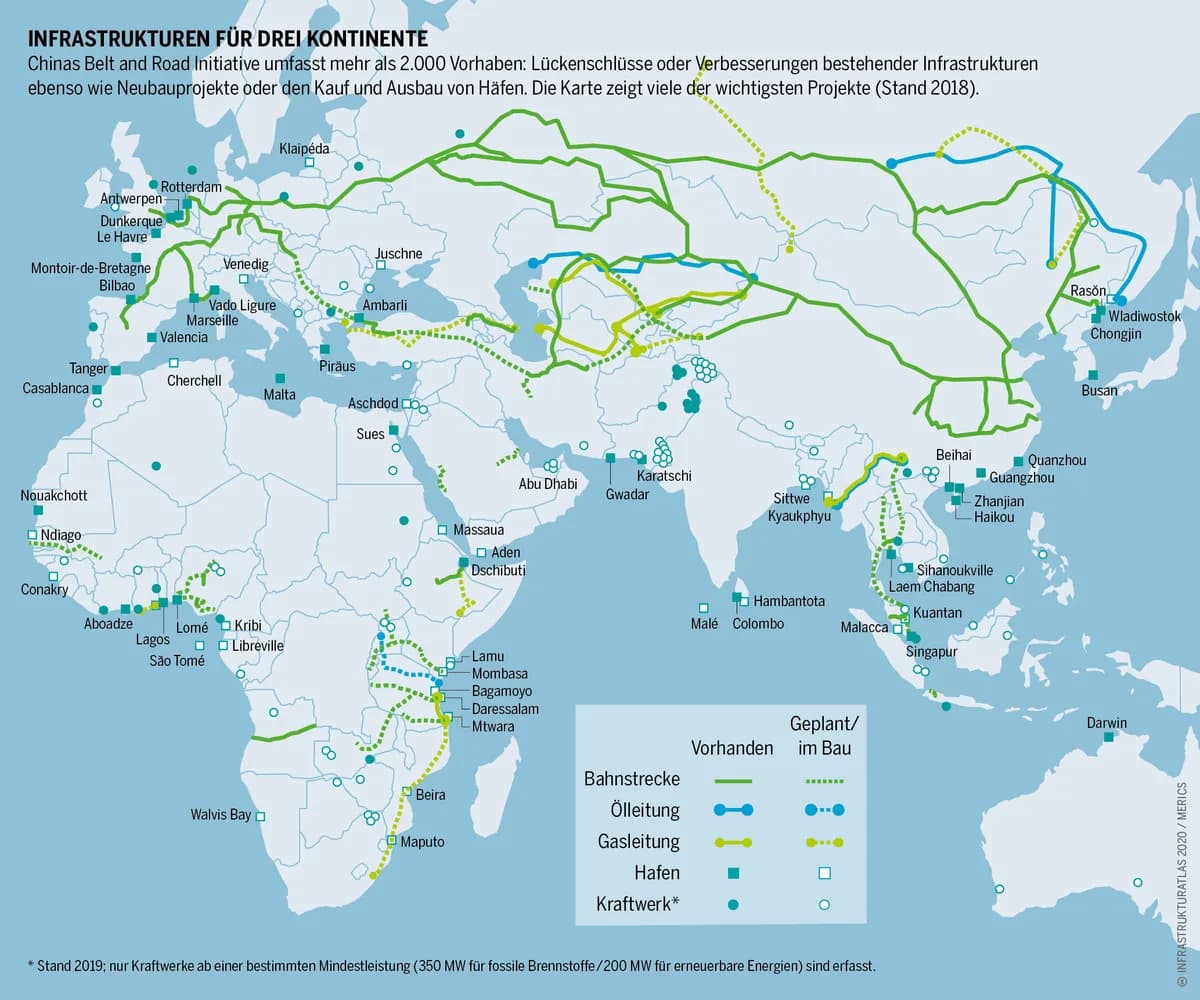
China's appeal rests on a pragmatic, non-interventionist approach: it buys Arab oil, builds infrastructure, and avoids lecturing governments on human rights or democracy. Russia maintains influence through OPEC+ coordination with Saudi Arabia and military engagement across the region. Neither power offers an ideological alternative, but neither has bombed Arab cities or backed prolonged occupations.
The France lesson, and whether repair is possible
One finding offers a glimmer of hope for Western policymakers. France's favorability across the Arab world rebounded significantly after Paris recognized Palestinian statehood in September 2025, rising 11 points in Tunisia, 10 in Morocco, and 7 in Lebanon. This demonstrates that symbolic policy changes can move the needle on Arab opinion.
The authors argue the United States could begin to recover its standing by winding down the war in Iran, pressing Israel on Palestinian rights and sovereignty, and "matching its deeds to the principles it once professed to hold." But they add a sobering caveat: given that the surveys were conducted before Khamenei's assassination and the full-scale Iran war, "Arab publics might be angrier at the United States than they were when we polled them."
The Middle East Institute captured the paradox precisely: Washington is "more visibly engaged in the region than the 'America first' rhetoric suggests, yet its influence over regional outcomes continues to erode." The United States remains the most powerful military actor in the Middle East. But power without legitimacy is a depreciating asset.