
Ancient DNA Proves Three Millennia of Genetic Continuity in Kurdistan's Zagros Heartland
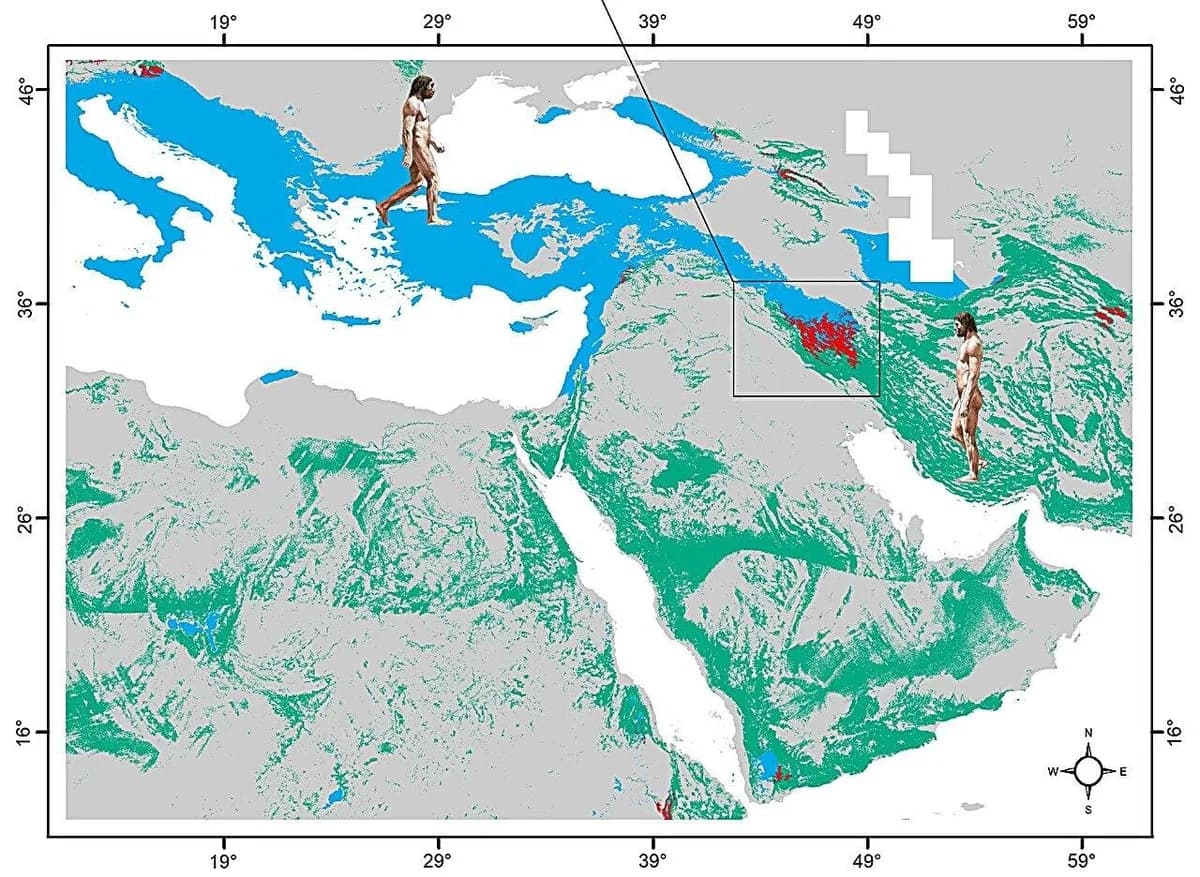
1. Ancient DNA proves three millennia of genetic continuity in the Zagros, Kurdistan's heartland
A May 2025 study in Nature Scientific Reports by Motahareh Ala Amjadi and colleagues has produced what the science blog Anthropology.net calls "one of the most extensive and well-supported cases of diachronic genetic continuity ever documented in the ancient world." The team analyzed 50 samples from nine archaeological sites across Iran, yielding 23 new mitogenomes and 13 nuclear genomes spanning 4700 BCE to 1300 CE, more than six thousand years.
The study's most significant finding centers on a male individual from Gol Afshan Tepe, on the eastern foothills of the Zagros Mountains, dating to the Early Chalcolithic (~5th millennium BCE). Supervised ADMIXTURE analysis showed he was primarily descended from Early Neolithic farmers related to populations at Ganj Dareh, Wezmeh, and Tepe Abdul Hosein, all sites in the central Zagros, in what is today Kermanshah Province and Lurestan, the heart of Iranian Kurdistan. As the authors state: "All these findings suggest long-term cultural and biological continuity in and around the Zagros region."
This continuity persisted through staggering political upheaval. Samples from the Achaemenid, Parthian, and Sassanid periods show that despite governing empires rising and falling, the underlying genetic makeup of plateau populations remained remarkably stable. Maternal lineages dominated by haplogroups H, J, U, T, and HV, the same lineages found in modern Iranian and Kurdish populations, persisted from prehistory to the present. The paper's own abstract concludes: "Diachronic analyses of uniparental lineages on the Iranian Plateau further highlight population stability from prehistoric to modern times."
What this means for Kurdish genetic heritage
The paper does not explicitly discuss modern Kurds, but the implications are direct. The key reference Neolithic site, Ganj Dareh, sits in Kermanshah Province, the heart of Iranian Kurdistan. The "Iran_N" or "Zagros Neolithic" ancestry component identified in this and earlier studies (Lazaridis et al. 2016; Broushaki et al. 2016) is carried at the highest levels by modern Kurds and Lurs, typically 40–60% of total ancestry. A 2019 genome-wide study of 1,021 Iranians (Hosseinzadeh et al., PLOS Genetics) placed Kurds within a genetically continuous "Central Iranian Cluster" showing stability over at least 5,000 years with limited outside influx.
The chain of evidence is now robust: Zagros Neolithic farmers (~10,000 BCE) → Chalcolithic continuity (~4700 BCE, this study) → persistence through historical empires (355 BCE – 460 CE) → modern Kurdish populations carrying the highest proportions of this same ancestry. As Anthropology.net summarized: "Empire did not equate to erasure."
An important caveat: genetic continuity does not mean genetic isolation. Modern Kurds also carry ~15–30% Anatolian/Levantine-related and ~15–30% Steppe-related (Indo-Iranian) components. The study establishes a dominant Zagros foundation, not pure descent.