
Iraq Elects PUK's Amedi as President With Iran-Backed Votes as KDP Boycotts to Protect Kurdish Bargaining Power
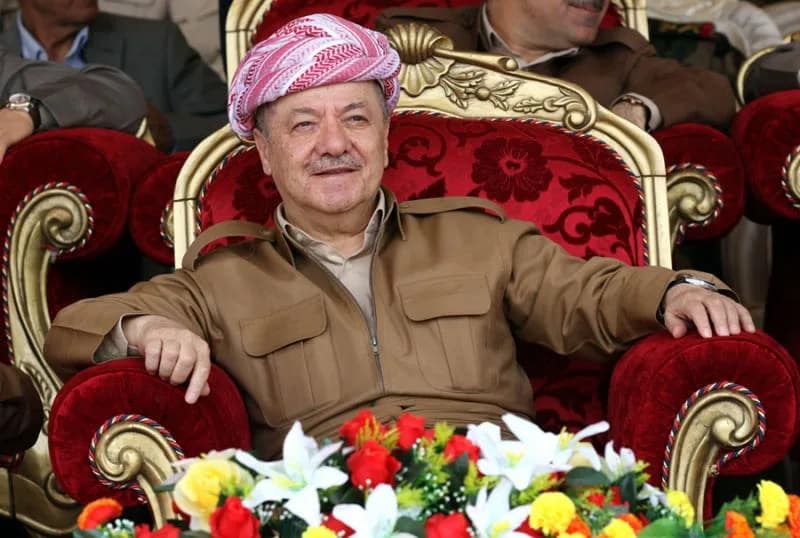
Iraq's parliament elected PUK candidate Nizar Amedi as president on April 11, but the vote exposed a deeper power struggle. Iran-aligned Shia parties in parliament pushed to elect the president before choosing a prime minister, a sequence that strips Kurds of their main bargaining chip: if the presidency is given away first, Kurdish parties lose all leverage over who becomes PM, which cabinet posts they get, and how much of the federal budget goes to the Kurdistan Region. KDP leader Masoud Barzani, whose party governs the Kurdistan Region and holds both its presidency and prime ministry, boycotted the session and rejected the result, demanding both positions be decided as a package deal. The PUK, which has held the Iraqi presidency since 2005, backed the vote, arguing that since the KDP already controls the Kurdistan Region's top two posts, Baghdad's presidency belongs to them.
Critics note that Barzani's "package deal" demand also serves a KDP interest: the party nominated its own candidate, Foreign Minister Fuad Hussein, for the presidency, breaking a 20-year arrangement in which the PUK held the post. If successful, the KDP would control both the Kurdistan Region's top positions and Iraq's presidency, an unprecedented concentration of Kurdish political power in one party's hands. Supporters counter that regardless of which party holds the seat, a president elected by Shia bloc votes rather than Kurdish consensus will answer to the Coordination Framework, not to Kurdish interests.
How Iraq divides power (and why it matters)
Iraq is a country of three major communities: Shia Arabs (the largest group, roughly 60% of the population), Sunni Arabs (about 20%), and Kurds (about 15-20%). After the American invasion toppled Saddam Hussein in 2003, these three groups made an informal deal to share power. The deal was never written into the constitution, but it has governed Iraqi politics ever since:
- President (largely ceremonial): always a Kurd
- Prime Minister (the real power): always a Shia Arab
- Speaker of Parliament: always a Sunni Arab
This arrangement is called muhasasa (sectarian apportionment). It is not a law. It is a gentleman's agreement. And it is the glue that holds Iraq's fragile political system together.
Why does this power-sharing system exist?
Under Saddam Hussein's regime (1979-2003), Iraq was ruled exclusively by Sunni Arabs despite Shia Arabs being the majority. Kurds faced genocide (the Anfal campaign killed approximately 182,000 people). When the regime fell, the new system was designed to prevent any one group from monopolizing power again. The trade-off was simple: every major community gets a guaranteed seat at the top table. If you remove that guarantee, the whole system collapses.
What is happening right now
Iraq held parliamentary elections in November 2025. The Coordination Framework, a coalition of Shia political parties (including Iran-aligned factions), won the most seats. They initially nominated former Prime Minister Nouri al-Maliki for the PM position. Maliki is deeply controversial: he governed Iraq from 2006 to 2014, and many blame his sectarian policies for creating the conditions that allowed ISIS to take over a third of the country in 2014.
Then something unusual happened. US President Donald Trump publicly called Maliki "a very bad choice" for prime minister. Under American pressure, the Coordination Framework withdrew Maliki's nomination on March 3, 2026. But they have not agreed on a replacement. Five months after the election, Iraq still has no new government.
What is the Coordination Framework?
The Coordination Framework (Arabic: al-Itar al-Tansiqi) is a broad alliance of Shia political parties in Iraq. It includes Maliki's State of Law Coalition, the Badr Organization (which has its own militia), the Fatah Alliance (the political arm of Iran-backed militias), and several other factions. Together, they control the largest bloc in parliament. In Iraq's system, the largest bloc gets to nominate the prime minister. The Coordination Framework essentially decides who runs the country.
Barzani's "package deal" strategy
Here is the core of the crisis. The Coordination Framework wants to elect the president first and deal with the prime minister later. Barzani says absolutely not.
Why? Because of bargaining power. In Iraq's system, the Kurds' biggest card is the presidency. If the president is elected before the PM is decided, the Kurds have already given away their main bargaining chip. They lose leverage over which Shia politician becomes PM, which ministers Kurds get in the cabinet, and what concessions they can extract for the Kurdistan Region (budget share, oil revenue, Peshmerga funding, disputed territories).
Barzani's logic is straightforward: "You want a president? Fine. But first, tell us who the prime minister will be, and let us negotiate a full package." This ensures Kurdish interests are protected across the entire government, not just the ceremonial presidency.
The KDP-PUK rivalry adds another layer
Adding complexity, Iraq's two main Kurdish parties disagree on strategy. The KDP (led by the Barzani family, dominant in Hewler/Erbil and Duhok) and the PUK (led by the Talabani family, dominant in Silemani/Sulaymaniyah) have been rivals for decades.
Every Iraqi president since 2005 has been from the PUK: Jalal Talabani, Fuad Masum, Barham Salih, Abdul Latif Rashid, and now Nizar Amedi. The KDP accepted this for 20 years because they controlled the Kurdistan Region's presidency and prime ministry.
This time, the KDP challenged the PUK's monopoly. They nominated Foreign Minister Fuad Hussein for president and argued the position belongs to "all Kurds, not one party." When the PUK and the Coordination Framework pushed the presidential vote through without a PM deal, the KDP boycotted the April 11 session. Amedi was elected with 227 votes, but without KDP participation, his mandate is questioned.
What does this mean for ordinary people?
Five months without a government means:
- No new budget. Iraq operates on emergency spending. Infrastructure projects stall. Public sector salaries are delayed.
- Kurdistan Region's budget share is frozen. The region depends on Baghdad for its budget. No government means no budget negotiations.
- No policy on the Iran war aftermath. Iraq needs a government to negotiate reconstruction, manage the Hormuz crisis impact, and address the 614 missiles that hit the Kurdistan Region.
- Security vacuum. With no defense minister confirmed, coordination between Iraqi forces, Peshmerga, and the international coalition is informal and fragile.
Why Kurds across all four parts should care
This is not just Bashur (Southern Kurdistan) politics. What happens in Baghdad directly affects:
- Bakur (Turkey): A weak Iraqi government means Turkey faces less resistance to its military operations in northern Iraq. Turkey already has dozens of bases inside the Kurdistan Region.
- Rojhilat (Iran): Iran-aligned factions in the Coordination Framework directly influence how Baghdad treats Kurdish rights. A PM friendly to Iran could tighten pressure on Kurdish opposition groups.
- Rojava (Syria): Iraq's political stability affects the entire region. Kurdish gains in Syria are safer when Iraq has a stable, Kurdish-inclusive government.
Barzani's gamble is that by refusing to give away the presidency cheaply, he can force a better deal for Kurds across the board. Whether it works depends on whether the Coordination Framework needs Kurdish votes more than Kurds need government salaries.